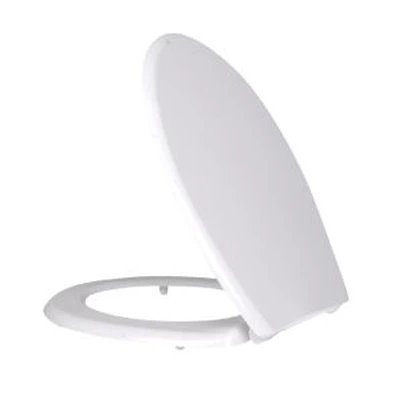
Toilet Lid: Lid? Still Not Covered?
Leave a message
Research Misreading: if the toilet lid is opened when flushing, the instantaneous cyclone in the toilet can carry bacteria or microorganisms up to 6 meters in the air, and suspend in the air for several hours, and then fall on the wall, toothbrush, mouthwash cup and towel. Nowadays, in most families, toileting, washing and showering are carried out in the bathroom. Toothbrush, mouthwash cup, towel, etc. share the same room with the toilet. Naturally, they are vulnerable to bacterial contamination. Therefore, should develop the habit of toilet cover when flushing
Comprehensive interpretation of the study: from the numerous papers cited in the two medical reviews published this year, it can be seen that there is a certain relationship between the cyclone caused by water pumping and the spread of microorganisms, and the habit of closing the toilet cover when flushing is also worth promoting
However, when these studies spread on social platforms, there are a lot of key information in the research - which microorganisms may spread through this way? What is the scope of the spread of these microorganisms? How much potential harm does the spread microorganism have to human body? ——It was ignored, compressed into a simple conclusion, and added details not mentioned in these studies that "the instantaneous cyclone in the toilet can carry bacteria or microorganisms up to 6 meters in the air and suspend them in the air for several hours".
Not all microbes have the conditions to rise
Only those gifted microbes can take advantage of the toilet cyclone. A 2005 study found that Salmonella bacteria cultured in toilets can aggregate into a structure called biofilm, which can be firmly rooted in sewers. Because of such a "reserve" of bacteria, they can still be found in the toilet 12 days after the end of the experiment. This also increases the possibility of their propagation by pumping cyclones. Other microbes, unable to go deeper, look in the opposite direction. As early as 1980, scientists found that bacteria with more lipid in cells were more likely to accumulate on the surface of water. If there is a cyclone that can bring up microorganisms in the water, they will be the vanguard of microorganisms.
However, the characteristics of these microorganisms themselves are not enough for them to spread from the toilet to the air, and the power of the cyclone also determines the scope of transmission. Interestingly, up to now, people still know little about the physical characteristics of this kind of cyclone. The only certainty is that this kind of cyclone will change with the type of toilet.
Due to the different microorganisms used in the experiment, the spread range is also different (the experimental toilet is mostly "siphon type"). Within 2 hours after flushing, E. coli will be concentrated in the range of about 1 meter in diameter with the toilet as the center, Salmonella can spread to the same range within 30 minutes, and Clostridium will mainly gather in the range of 25 cm from the toilet seat to the toilet within 60 minutes.
In some experiments that have been observed for a long time, microorganisms can spread to the whole bathroom at a very low concentration (only 20% of the culture dishes on the wall have bacteria growing, and the longest number of colonies in a single culture dish is 5%; only 5% of the culture dishes in the bathtub have bacteria growing, but the longest number of colonies in a single culture dish is more than 100), which is also related to the mixing and expansion of droplets containing microorganisms with air It has something to do with it.
However, in these studies, no microorganism spread to 6 meters (the TSU Tun: it is difficult to make complaints about a bathroom with a height of more than 6 meters...) It's a good record. As for how long these microbes can stay in the air, there is no final conclusion.
Alert but no need to panic
In some extreme cases, microorganisms transmitted by toilet cyclone may affect human health. Mycobacterium tuberculosis lipid more, easy to accumulate in the upper layer of toilet residual water. When people's gastrointestinal tract is infected with Mycobacterium tuberculosis, it will cause diarrhea, causing its re transmission. However, it is estimated that this only accounts for less than 5% of the total infection cases .
Another microorganism that may be transmitted by toilet cyclone is well known as SARS virus. A report on the outbreak of SARS in Amoy Gardens, Hong Kong, in 2003 speculates that the excreta of the first SARS patients spread rapidly through the sewers and exhaust fans on the floor, causing the outbreak of SARS in the whole building.
However, these extreme conditions or unconfirmed research conjecture that the potential damage caused by toilet cyclone in daily life may not be so great. In addition, no matter which kind of microorganism wants to cause disease, it needs a certain "pathogenic dose". In the experiments mentioned above, the researchers mixed the microorganism with feces or culture medium to form a suspension for testing, which naturally helped the spread of microorganisms. In real life, only diarrhea or vomiting is close to the experimental conditions. In other words, normal defecation will only limit the spread of microorganisms, and the concentration in the air will be lower. However, the concentration of microorganisms suspended by the cyclone in the air can vary by hundreds of times according to different species. Therefore, whether the specific microorganisms brought by the toilet cyclone can cause disease remains to be further studied in the future.